Introduction to PIC Microcontroller (PIC18F4550)
Complete Video Course on PIC18F4550 Microcontroller
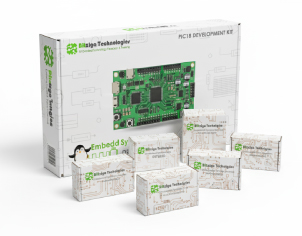
- Complete Video Course on PIC18F4550 Microcontroller
- PIC microcontroller (PIC18f4550)
- Key Features:
- Architecture Overview:
- Memory Organization:
- Peripherals and Interfaces:
- Typical Applications:
- Why Choose PIC microcontroller (PIC18f4550)?
- Conclusion:
- Learn More
- Complete Video Course on PIC18F4550 Microcontroller
- 💬Frequently Asked Questions (FAQ)
PIC microcontroller (PIC18f4550)
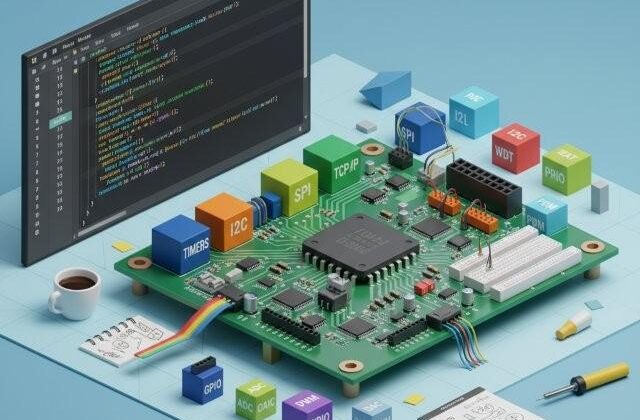
The PIC microcontroller (PIC18f4550) is a high-performance 8-bit microcontroller developed by Microchip Technology. It belongs to the PIC18 family, known for its rich peripheral set and efficient instruction execution. One of its standout features is built-in USB support, making it a great choice for data acquisition, automation, and communication projects.
Key Features:
- Operating Voltage: 2.0V to 5.5V
- CPU: 8-bit, up to 48 MHz operation
- Program Memory: 32 KB Flash
- RAM: 2 KB
- EEPROM: 256 Bytes
- I/O Pins: 35
- USB 2.0 Interface: Supports device and host modes
- Timers: 4 (Timer0–Timer3)
- Communication Modules: UART, SPI, I2C, USB
- ADC: 10-bit, 13 channels
- PWM: 4 channels
- Interrupts: Multiple priority levels
Architecture Overview:
The PIC microcontroller (PIC18f4550) architecture is based on a Harvard architecture, which means:
- Pipelined processing for efficient operation
- Separate program and data memory buses
- High-speed instruction execution (1 instruction per 4 clock cycles)
Memory Organization:
- Program Memory (Flash): Stores application code
- Data Memory (RAM): Temporary variables and stack
- EEPROM: Stores user data even after power off
Peripherals and Interfaces:
- Analog-to-Digital Converter (ADC) for sensing analog signals
- Timers and Counters for delays, measurement, and event timing
- PWM Module for motor control and LED dimming
- Communication Interfaces (UART, SPI, I2C) for device communication
- USB Module for PC interfacing
Typical Applications:
- USB-based data loggers
- Industrial automation controllers
- Sensor interfacing systems
- Educational boards for embedded projects
- Custom USB HID devices (keyboard, mouse, joystick)
Why Choose PIC microcontroller (PIC18f4550)?
- Great for learning embedded systems
- Supported by MPLAB X IDE and XC8 compiler
- Huge online community and examples
- It can directly communicate with the PC via USB
Conclusion:
The PIC microcontroller (PIC18f4550) is an ideal choice for students and professionals who want to explore embedded design, communication interfaces, and USB applications. In upcoming tutorials, you’ll learn how to configure each module and create hands-on projects.
Learn More
Are you excited to build projects like SPI-based EEPROM storage, digital potentiometers, and display drivers?
🎓 Join our Full Practical Video Course on PIC18F4550 Microcontroller
Learn every module — GPIO, ADC, UART, SPI, I²C, PWM, and Interrupts — with hands-on coding and real circuit demonstrations.
➡️ Start Learning Now at “Master PIC18F4550 Programming“
Complete Video Course on PIC18F4550 Microcontroller
PIC microcontroller (PIC18f4550)
Software development tools & documents:
💬Frequently Asked Questions (FAQ)
The PIC18F4550 is an 8-bit microcontroller from Microchip Technology, known for its high performance, rich peripheral set, and built-in USB interface. It’s widely used in embedded systems, automation, and educational projects.
Because it’s versatile, affordable, and has built-in USB support — making it ideal for both learning and real-world projects like data loggers, sensors, and control systems.
It operates between 2.0V to 5.5V, typically powered by 5V in most development boards.
It can run at up to 48 MHz using an external crystal and internal PLL (Phase-Locked Loop) configuration.
Program Flash: 32 KB
Data RAM: 2 KB
EEPROM: 256 Bytes
Yes, it includes a built-in USB 2.0 interface, supporting both Device and Host modes — ideal for projects that connect directly to a computer.
It supports UART, SPI, I2C, and USB, enabling communication with sensors, displays, and other microcontrollers.
You can use MPLAB X IDE along with the XC8 Compiler provided by Microchip. These tools are free and ideal for embedded C programming.
It can be powered via the USB port (VBUS 5V) or an external regulated 5V supply connected to the VDD pin.
USB-based data loggers
Industrial control systems
Educational microcontroller boards
Communication devices
Custom USB HID (keyboard, joystick) projects
Absolutely! It’s one of the best microcontrollers for beginners to learn embedded systems programming with hands-on hardware experience.
Start with GPIO and LED projects, then explore ADC, Timers, UART, I2C, and USB modules.
👉 Enroll in Bitziga’s Full Practical Video Course on PIC18F4550 to master it step-by-step.